1. What Is a 3-Way Stopcock with Extension Tubing?
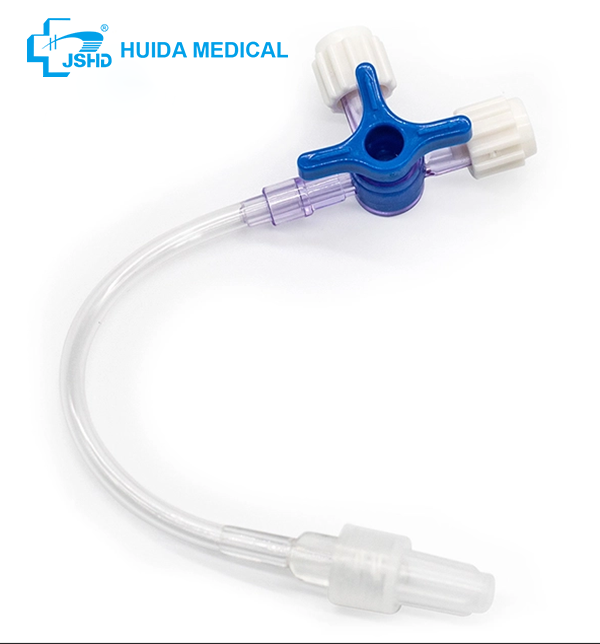
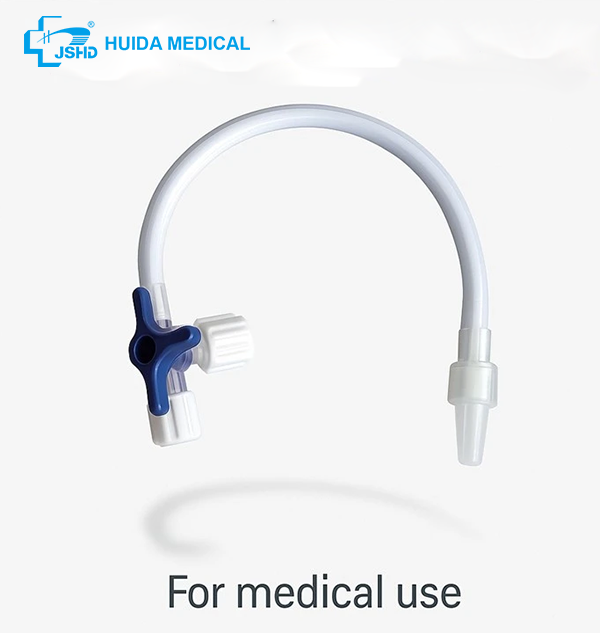
A 3-way stopcock with extension tubing is a sterile, single-use medical device designed for intravenous (IV) therapy, blood transfusion, arterial line monitoring, and continuous medication administration.
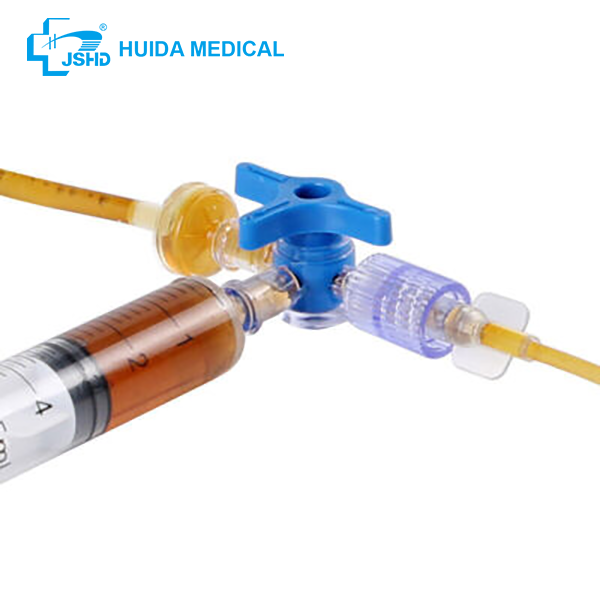
It combines two elements into one ready-to-use product: a rotatable three-way stopcock (valve) and a length of flexible extension tubing. The valve lets a clinician direct flow between three connection points, while the tubing moves the point of access away from the patient's insertion site. This single-piece design is widely used where multiple fluids must be delivered through one primary line without repeated disconnection.
2. Key Features and Specifications
2.1 ComponentsThe device integrates a 3-way rotatable stopcock valve with flexible, kink-resistant extension tubing, so the two work as one connected path rather than separate parts. 2.2 ConnectorsStandard male and female Luer lock, or Luer taper connections with a 6% taper, are used for compatibility with syringes, IV lines, and pressure monitoring equipment. This is the key to keeping the device universal across most standard infusion and monitoring setups. 2.3 Tube LengthsTubing is commonly available from 5 cm up to 200 cm, with some manufacturers offering lengths up to 250 cm. Longer lengths suit applications that need the injection or sampling point kept well away from the patient, such as arterial line setups or drug delivery in critical care. 2.4 MaterialsDevices are typically made from medical-grade, transparent, DEHP-free PVC or soft-touch polymers. Transparent material allows visual confirmation of fluid flow and air bubbles; many grades are also lipid-resistant, which matters when infusing lipid-based nutrition or drugs. 2.5 Flow ControlThe rotating handle includes visual arrow indicators that show which fluid path is open or closed. When configured correctly, the bore supports uniform flow while minimizing turbulence — important for accuracy in infusion and for reducing dead-space that can trap medication. 2.6 Pressure ToleranceDevices are engineered to withstand standard-to-high pressure ranges, with models frequently tested up to several bar or hundreds of psi, depending on the specific specification. If your application involves high-pressure flushing or arterial line monitoring, verify the pressure rating of the exact model you intend to order. Multi-Line InfusionMultiple drug or fluid lines can be connected through a single primary catheter site. This is useful in ICU and anesthesia where several medications run simultaneously. Reduced ManipulationBecause the stopcock and tubing shift the injection and manipulation point away from the direct patient insertion site, mechanical irritation and the risk of infection from repeated handling are reduced. Sampling and FlushingThe design supports blood drawing, secondary medication boluses, and line flushing without disturbing the primary line — a daily requirement in arterial line monitoring and continuous drug delivery. 4. How to Match the Right Configuration to Your Order
Two specifications matter most when you place an order:
Tubing length — confirm the working distance between the access point and the patient site. A 5–10 cm length suits short extensions; 100–200 cm fits arterial lines and bedside drug delivery.
Pressure rating — if the product will be flushed under pressure or used in arterial monitoring, ask the supplier to confirm the tested pressure range of the specific model.
Also state whether you need lipid-resistant properties, since not all grades are rated for lipid-based infusions.
5. Why Source from a Manufacturer
For importers, distributors, and OEM buyers, buying directly from the manufacturer means you can specify tube length, connector type, and material grade to match your market — rather than accepting a fixed catalogue SKU. A manufacturing partner should be able to confirm the tested pressure range, material compliance, and packaging format (sterile, individually wrapped or bulk) for the model you are quoting.
6. FAQ
Is the product sterile? Yes, the reference configuration is a sterile, single-use device. Confirm the sterilisation method and shelf-life labelling with the supplier.
Can the stopcock and tubing be ordered separately? The reference describes an integrated device. If you need separate components, specify this in your inquiry.
Does it fit standard syringes? Yes, via standard male and female Luer lock or Luer taper connections.
What is the maximum tubing length? Commonly up to 200 cm, with some manufacturers offering 250 cm. Confirm with the model specification.
For specifications, custom tubing lengths, material grades, or an OEM quotation, contact the JSHD-MEDICAL team with your required length, pressure rating, and whether lipid-resistant properties are needed.