
Welcome To Huida

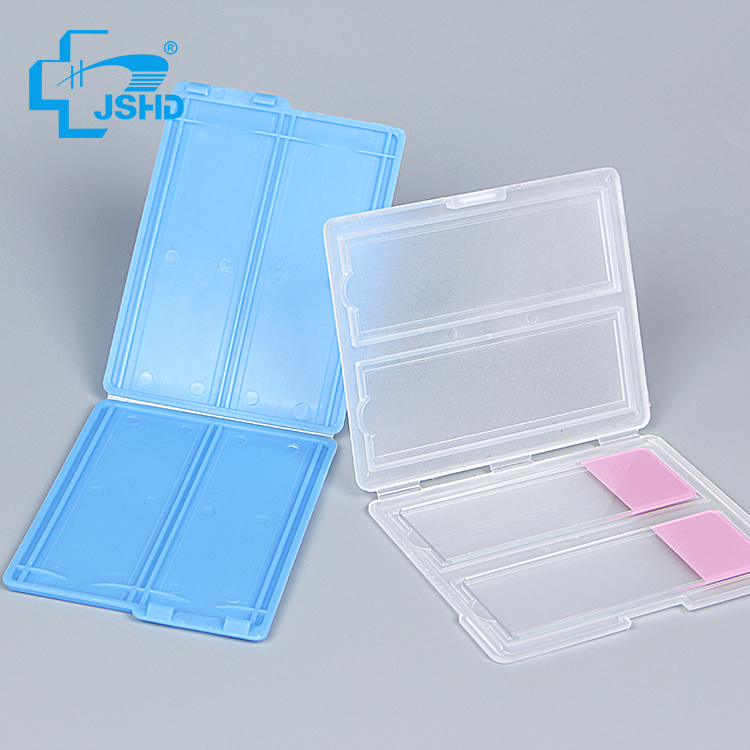
Frosted Microscope Slides
Microscope Slides: The Foundation of Every Laboratory Diagnosis
In every pathology department, histology lab, and research institution, one consumable remains indispensable: the microscope slide. These thin, rectangular pieces of glass serve as the platform upon which tissue sections, blood smears, cytological specimens, and microbial samples are mounted, stained, and examined under magnification. Despite their simple appearance, the quality of a glass microscope slide directly impacts imaging clarity, specimen adhesion, and diagnostic accuracy.
At JSHD Medical, we supply a comprehensive range of laboratory slides engineered to meet the exacting standards of clinical and research environments. This guide covers everything you need to know about microscope slide materials, types, specifications, and selection criteria.
Standard Specifications of Microscope Slides
The most widely used format for microscope slides is the standard rectangular dimension of 25 mm × 75 mm (approximately 1" × 3"), with a thickness ranging from 1.0 mm to 1.2 mm. This universal size ensures compatibility with virtually all compound light microscopes, slide stainers, and automated slide handlers found in modern laboratories.
Key dimensional and structural specifications include:
Dimensions: 25 × 75 mm (standard), with 25.4 × 76.2 mm also available for certain markets
Thickness: 1.0–1.2 mm, optimized for standard microscope objectives
Edge treatment: Ground edges, beveled edges, or safety-ground corners to reduce the risk of cuts during handling
Surface quality: Free of bubbles, scratches, and striations that could interfere with microscopic observation
Cleanliness: Pre-cleaned and ready-to-use options available, eliminating the need for in-house washing protocols
Glass Materials: Which One Is Right for Your Lab?
The choice of glass material significantly influences optical performance, chemical resistance, and cost. JSHD Medical offers microscope slides in three primary glass compositions:
Soda-Lime Glass
The most common and cost-effective option, soda-lime glass slides provide excellent clarity for routine histology, hematology, and educational applications. They are suitable for standard staining procedures and everyday laboratory use.
Borosilicate Glass
Offering superior thermal resistance and low autofluorescence, borosilicate glass slides are preferred for fluorescence microscopy, immunohistochemistry (IHC), and in situ hybridization (FISH) applications. Their enhanced chemical durability ensures consistent performance even under aggressive staining conditions.
Low-Iron / Extra-Clear Glass
Manufactured with reduced iron content, low-iron glass delivers exceptional light transmission and neutral color rendition. This makes it ideal for high-resolution imaging, digital pathology scanning, and any application where color accuracy is critical.
Types of Microscope Slides by Surface Treatment
Beyond material composition, laboratory slides are differentiated by their surface treatments, each designed for specific specimen types and workflows:
Plain (Uncoated) Slides
Standard plain slides feature a smooth, untreated glass surface suitable for general-purpose mounting. They are widely used in educational settings, basic biology labs, and for applications where specialized adhesion is not required.
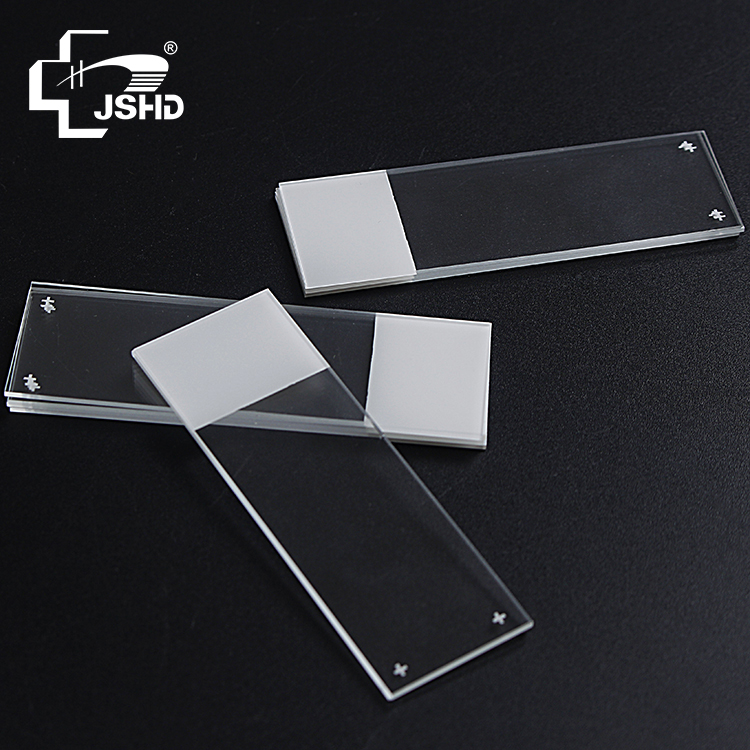
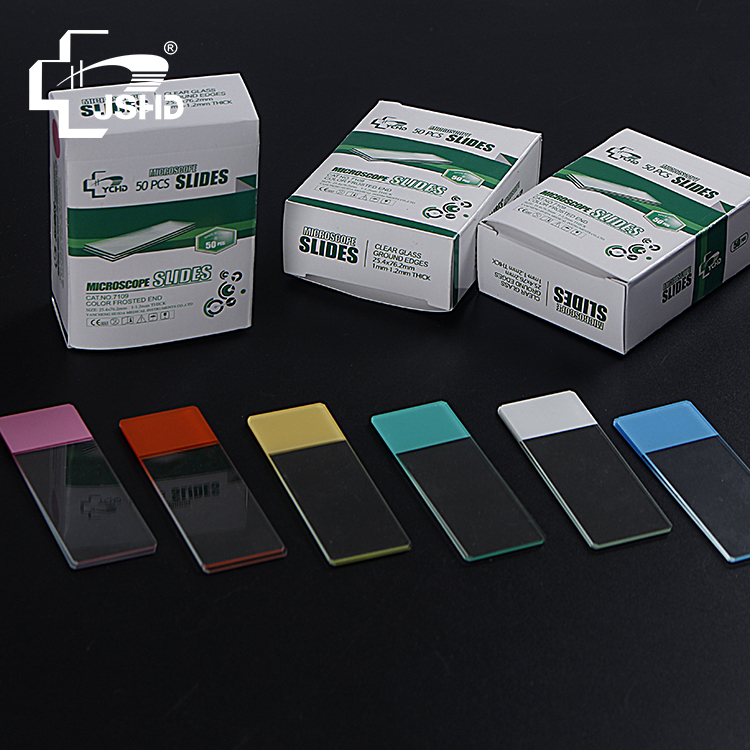
Frosted-End Slides
One end of the slide is chemically frosted or sandblasted to create a writable surface for sample identification using pencils, pens, or automated slide labelers. Frosted-end slides are the standard in clinical pathology and histology laboratories where accurate specimen tracking is essential. Color-coded frosted ends are also available for rapid visual categorization.
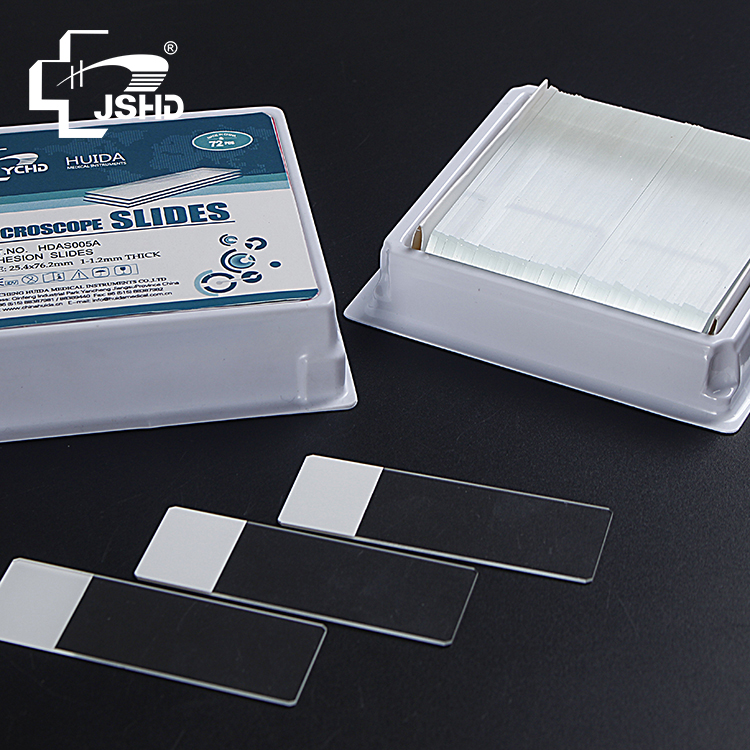
Positively Charged (Adhesion) Slides
Coated with a positively charged aminoalkylsilane layer, these slides enhance the adhesion of negatively charged tissue sections, particularly formalin-fixed paraffin-embedded (FFPE) samples and frozen sections. Positively charged slides minimize specimen loss during the multiple washing and incubation steps of IHC and special staining protocols.
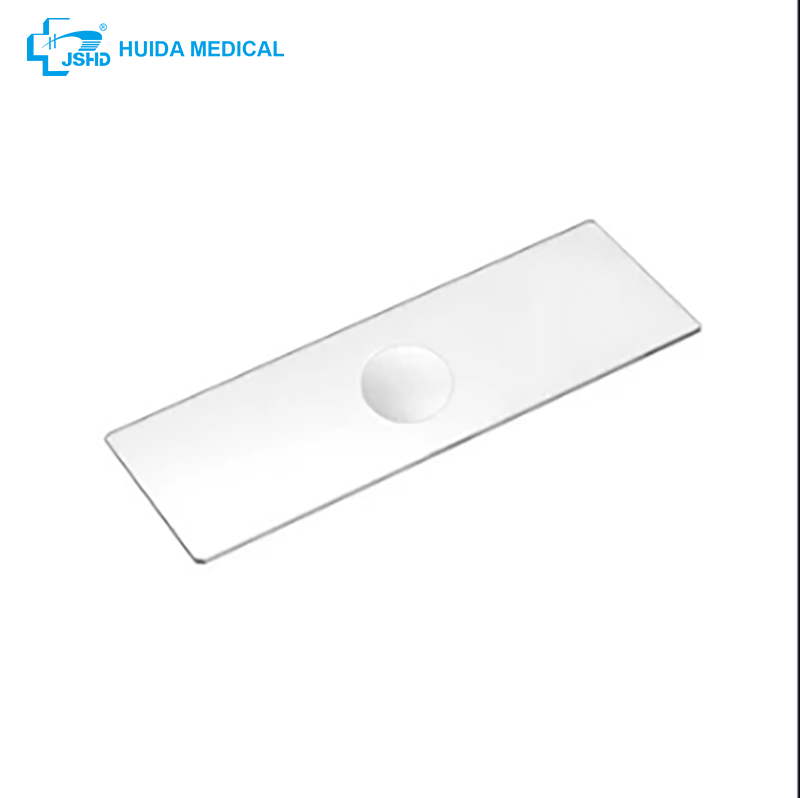
Concave / Depression Slides
Featuring one or more circular depressions (wells) ground into the surface, concave slides are designed for hanging-drop preparations, wet mounts, and the observation of living microorganisms. They are commonly used in microbiology, parasitology, and cell culture research.
Applications Across Medical and Research Fields
Microscope slides are foundational across a broad spectrum of laboratory disciplines:
Histopathology: Mounting paraffin-embedded tissue sections for H&E staining and diagnostic examination
Hematology: Preparing blood smears for complete blood count differentials and morphological assessment
Cytology: Preparing Pap smears, fine-needle aspiration (FNA) samples, and body fluid cytology
Microbiology: Gram staining, acid-fast staining, and wet-mount examination of microorganisms
Research: Immunohistochemistry, immunofluorescence, FISH, and digital pathology imaging
Education: Prepared slides and blank slides for teaching microscopy in academic institutions
How to Choose the Right Microscope Slide
Selecting the appropriate microscope slide depends on several factors:
Specimen type: Paraffin sections require positively charged slides; blood smears work well on plain or frosted slides; live specimens need concave slides.
Staining protocol: Aggressive or multi-step protocols (IHC, FISH) benefit from borosilicate or positively charged slides with superior adhesion.
Imaging modality: Fluorescence and digital scanning applications demand low-autofluorescence borosilicate or low-iron glass.
Throughput and automation: High-volume labs should prioritize slides with consistent dimensions, ground edges, and compatibility with automated stainers and scanners.
Budget: Soda-lime plain slides offer the best value for routine and educational use, while specialty coatings and glass types command a premium for clinical and research applications.
Quality Assurance and Certifications
JSHD Medical's microscope slides are manufactured under strict quality control systems and hold CE and ISO certifications, ensuring compliance with international medical device standards. Each batch undergoes inspection for dimensional accuracy, surface defects, optical clarity, and coating uniformity. Our pre-cleaned slides are processed in controlled environments to minimize particulate contamination, delivering slides that are ready for immediate use in critical diagnostic workflows.
Packaging and Bulk Supply
We offer flexible packaging options to suit laboratories of every scale: standard boxes of 50 or 72 slides, multi-pack cases for high-volume facilities, and custom packaging for OEM and private-label partners. As a trusted wholesale microscope slides supplier, JSHD Medical supports bulk orders with competitive pricing, reliable lead times, and dedicated export logistics for international clients.
Conclusion
The microscope slide may be one of the simplest items in a laboratory, but its impact on diagnostic quality is profound. From the choice of glass material to surface coating and edge treatment, every detail matters. Whether you operate a busy histopathology department, a research laboratory, or an educational institution, selecting the right laboratory slides ensures clearer images, better specimen retention, and more reliable results.
Explore JSHD Medical's full range of microscope slides and laboratory consumables. Contact our team for product specifications, bulk pricing, and custom sourcing solutions tailored to your institution's needs.
WHY CHOOSE US
Since its establishment, our factory has been developing first world
class products with adhering the principle
of quality first. Our products have gained excellent reputation in the industry and
valuabletrusty among new and old customers..
- Tel:86-515-88387981
- Qingfeng industrial park, yandong, yancheng, jiangsu, China
- sales@chinahuida.cn


Tips - Featured Products - Sitemap
Lab Microscope Slide, China Surgical Suture, Plastic Labware, Laboratory Glasswares, Microscope Slides, Laboratory Glassware, All Products