
Welcome To Huida
100 mL Plastic Graduated Cylinder Manufacturer | Huida Medical
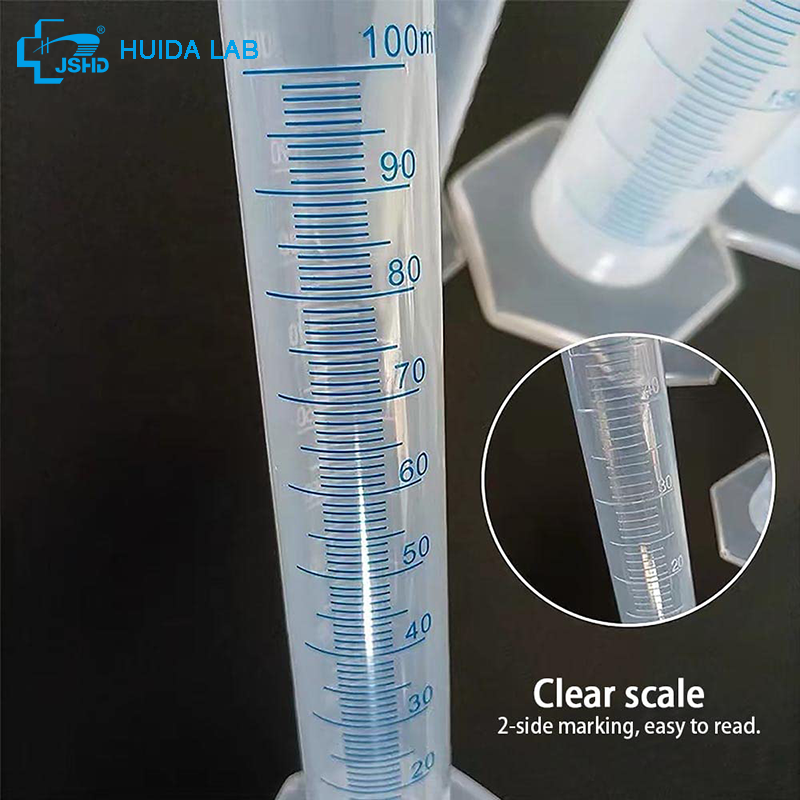
The 100 mL plastic graduated cylinder is designed to measure liquid volumes exactly and is used in a broad range of applications, including chemical, biological, and medical fields, as well as in education. Unlike beakers and Erlenmeyer flasks, which are primarily used for mixing and heating and estimating approximate volume, graduated cylinders have a narrow cylindrical shape with clearly marked graduations that allow for precise volume measurements.
Graduated cylinders made of plastic and produced with either high impact polypropylene (PP) or polymerized methylpentene (PMP) provide an excellent balance of durability, chemical resistance, and are shatterproof. Because of this, they are a suitable replacement for glass measuring cylinders in most laboratory settings.
Compared To Glass Graduated Cylinders
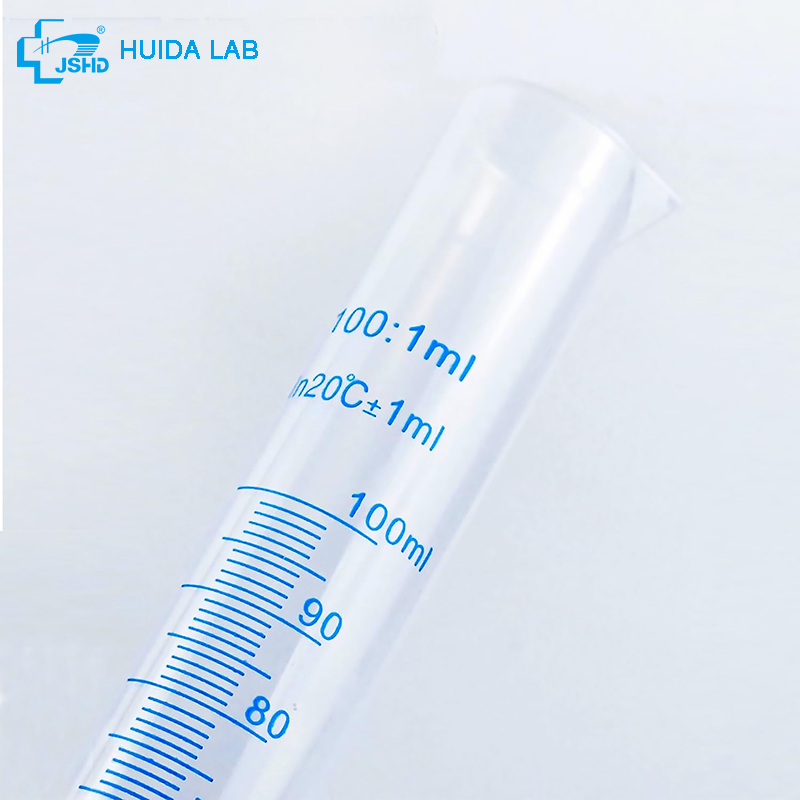
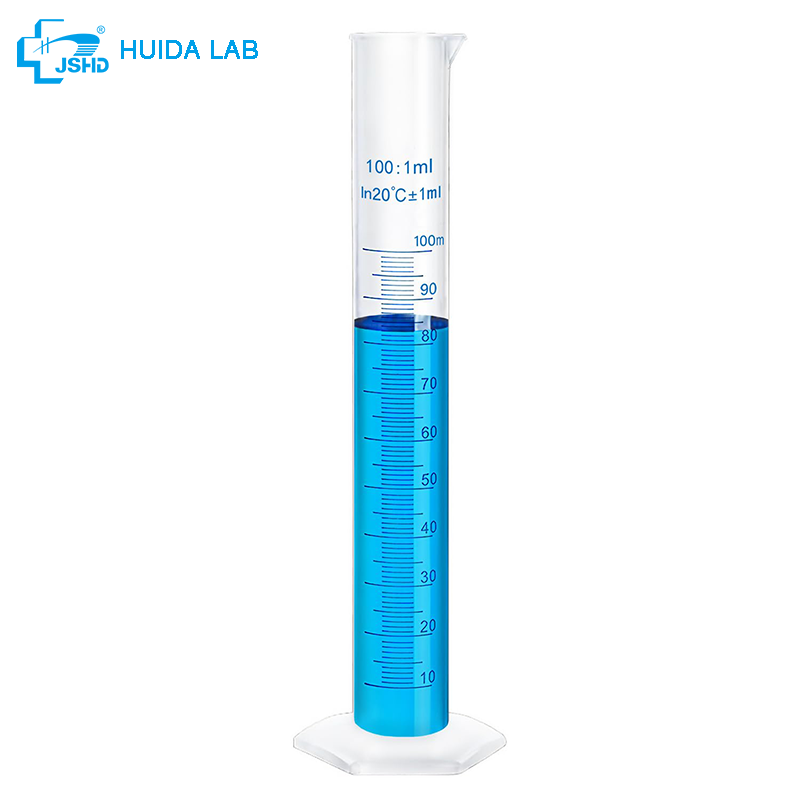
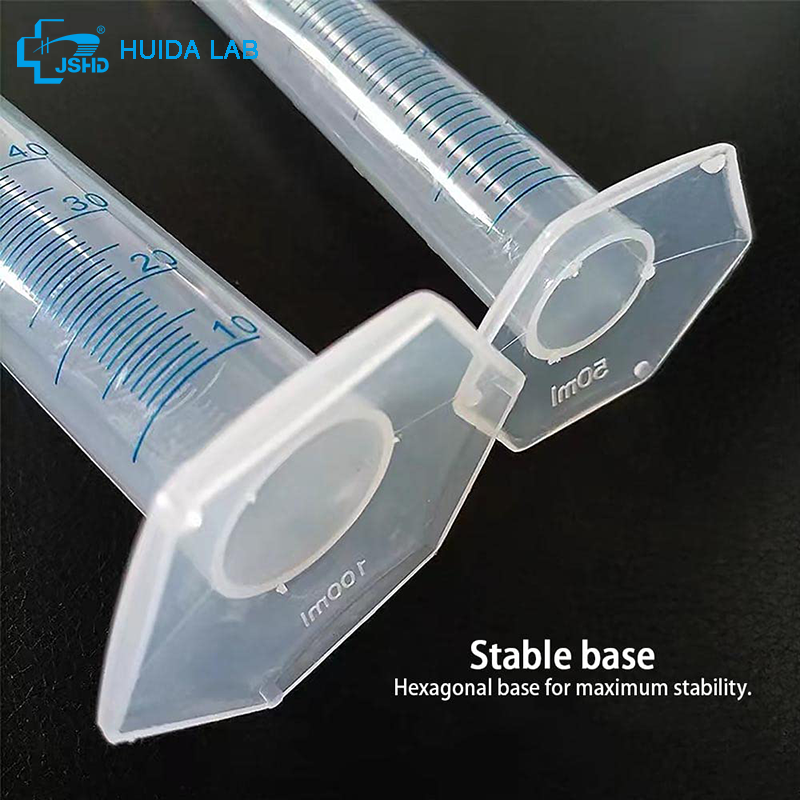
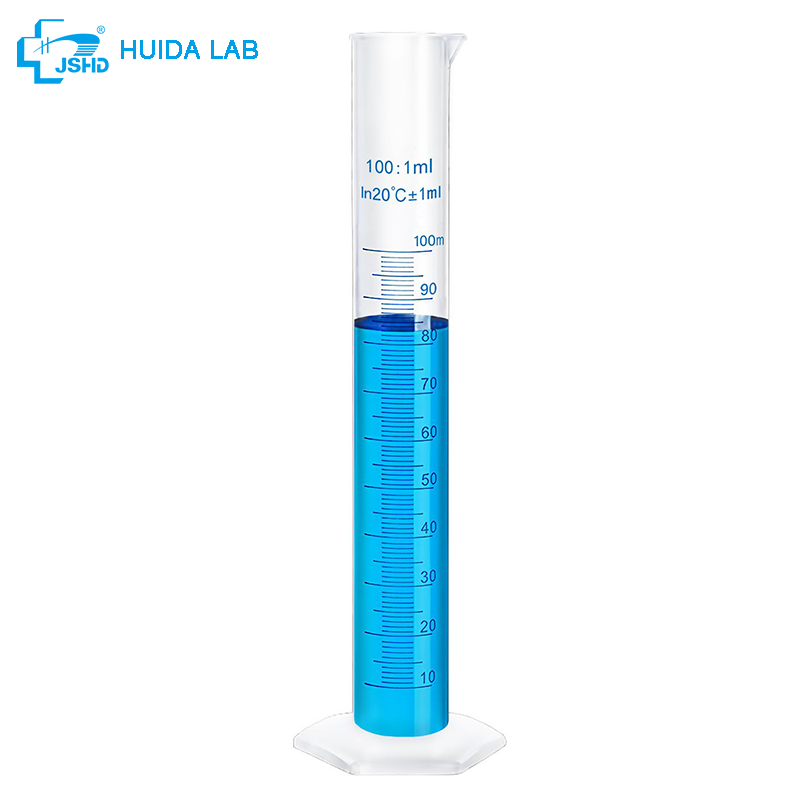
The plastic graduated cylinder is a laboratory measuring vessel used to measure liquid volumes as large as 100 milliliters.The 100 mL plastic graduated cylinder is made up of:
A transparent plastic cylinder body,Graduation markings,A base,A spout, andA cylinder body made of polypropylene.Compared to glass graduated cylinders, plastic graduated cylinders are lighter, more impact resistant, and safer for use in the laboratory.
Their main applications include:
● Chemical Labs
● Medical Research Facilities
● Biological Labs
● Schools and Universities
● Quality Control Labs
● Industrial Testing Labs
How to Use a 100ml Plastic Graduated Cylinder Correctly
● Choose the Appropriate Capacity
Choose a graduated cylinder close to the volume required for measurement.
Use a 100ml graduated cylinder when measuring approximately 100ml of liquid.
● Place on a Flat Surface
Before taking a reading, ensure the graduated cylinder is placed on a stable work surface.
● Read the Meniscus Correctly
Keep your line of sight level with the liquid surface.
For transparent liquids, read the bottom of the meniscus.
● Avoid Air Bubbles
Pour the liquid slowly along the side of the graduated cylinder to prevent air bubbles from affecting measurement accuracy.
Why Choose Huida as Your Plastic Graduated Cylinder Manufacturer
Experienced Laboratory Consumables Manufacturer,Jiangsu Huida Medical Devices Co., Ltd. is a professional manufacturer of laboratory plastic products and medical consumables with many years of export experience.
Reliable Quality Control
Our products are manufactured under a strict quality management system, including:ISO 13485,ISO 9001,CE Certification,OEM & ODM Customization.
We offer:
Customized rulers,Customized packaging,Private label manufacturing,Mass production solutions,Global Export Capability
Huida serves global clients, providing reliable laboratory consumables solutions for distributors, laboratories, and healthcare suppliers.
Frequently Asked Questions
Question 1: What are the uses of plastic graduated cylinders?
Plastic graduated cylinders are mainly used in laboratories to measure the volume of liquids, including chemical solutions, biological samples, and reagents.
Question 2: Can polypropylene graduated cylinders be reused?
Yes. With proper care, polypropylene graduated cylinders can be cleaned and reused multiple times.
Question 3: What is the difference between polypropylene and glass graduated cylinders?
Polypropylene graduated cylinders are lightweight, durable, and less prone to breakage, while glass graduated cylinders offer higher chemical resistance and the precision required for analytical applications.
Conclusion
The 100 mL plastic graduated cylinder is a practical and reliable laboratory measuring tool suitable for liquid measurement applications requiring safety, accuracy, and cost-effectiveness.
With its superior durability, chemical resistance, and user-friendly design, Huida Medical's plastic graduated cylinders provide reliable solutions for laboratories, distributors, and research institutions worldwide.
WHY CHOOSE US
Since its establishment, our factory has been developing first world
class products with adhering the principle
of quality first. Our products have gained excellent reputation in the industry and
valuabletrusty among new and old customers..
- Tel:86-515-88387981
- Qingfeng industrial park, yandong, yancheng, jiangsu, China
- sales@chinahuida.cn


Tips - Featured Products - Sitemap
Lab Microscope Slide, China Surgical Suture, Plastic Labware, Laboratory Glasswares, Microscope Slides, Laboratory Glassware, All Products